
Neuroscience and Peacebuilding
Exploring the Neurobiological Dimensions of Violent Conflict and the Peacebuilding Potential of Neuroscientific Discoveries
NeuroPeace is a series featuring researchers working at the intersection of neuroscience and peacebuilding. Contributors share insights on how brain science can support efforts to prevent war, terrorism, and other forms of violent conflict—and help individuals and societies heal in the aftermath.
The first edited volume in the series, Neuroscience & Peacebuilding, is organized into three parts, each focusing on a key theme relevant to conflict prevention and resolution:
Part 1: Individual Aggression
Part 2: Group Dynamics
Part 3: Trauma
These parts provide perspectives for practitioners, scholars, and anyone interested in how neuroscience can inform responses to conflict.
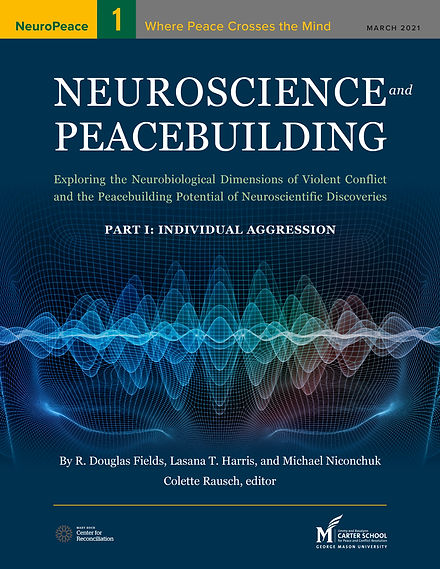
NeuroPeace No. 1: Individual Aggression
Citation: “Individual Aggression,” ed. Colette Rausch, NeuroPeace no. 1 (https://www.neuropeacepod.com/volume), March 15, 2021
This publication is part of a broader archive examining conflict, justice, and the human dimension. If you would like to support the preservation and accessibility of these materials, contributions are welcome.
NeuroPeace No. 2:
Group Dynamics
Citation: “Group Dynamics,” ed. Colette Rausch,
NeuroPeace no. 2 (https://www.neuropeacepod.com/volume),
April 15, 2021
This publication is part of a broader archive examining conflict, justice, and the human dimension. If you would like to support the preservation and accessibility of these materials, contributions are welcome.


NeuroPeace No. 3: Trauma
Citation: “Trauma,” ed. Colette Rausch,
NeuroPeace no. 3 (https://www.neuropeacepod.com/volume),
May 31, 2021
This publication is part of a broader archive examining conflict, justice, and the human dimension. If you would like to support the preservation and accessibility of these materials, contributions are welcome.
These materials are presented as part of an archival collection and reflect recorded conversations, publications, and perspectives at the time they were created.